

 Back
to
all
Back
to
all

Technology markets evolve at a rapid pace. Fluctuation in enterprise demand requires unified comms vendors to adapt their portfolios to remain relevant. One area that is causing increasing disruption within the unified communications space is the surging demand and uptake of video conferencing services.
Video communication was often seen as an optional extra. Conference calls took place using audio only with participants reluctant to engage in a visual exchange, even if they had the option to.
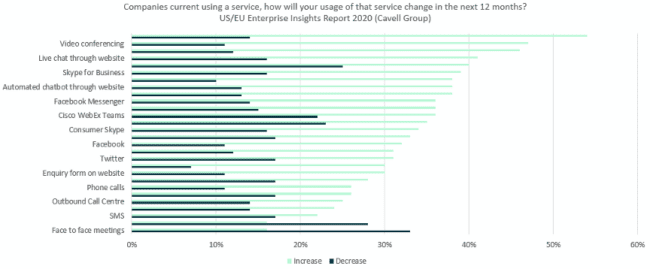
Throughout 2020 and 2021, video has come into its own as the default communication method.
‘Video first’ is now a phrase that has garnered true relevance.
Many fear that video conferencing specialists might attract customers who are looking to embrace emerging communications. The use of voice services may also be impacted by increasing enterprise adoption of video conferencing.
Unified communication vendors globally are now looking at video conferencing specialists as their key competitors over the coming years. This article will explore some of the macro trends behind this increased competition and try to confirm if the unified communications industry should fear video conferencing.