

 Back
to
all
Back
to
all
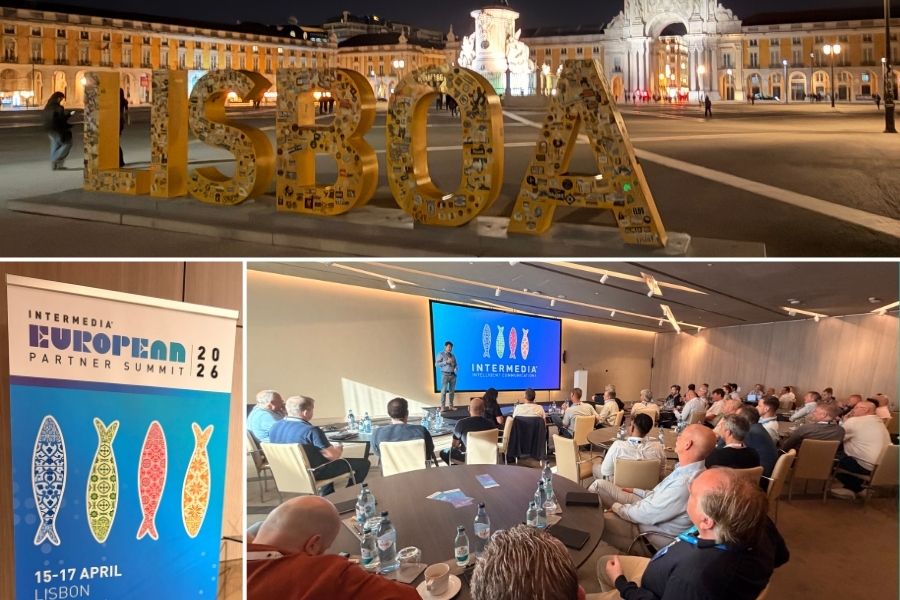
Partner events often reveal more about market conditions than about products. Intermedia’s European Partner Summit 2026 was a useful example of this, despite its extensive product focus. While positioned as a partner engagement forum, the most informative moments were those that reflected broader pressures shaping the European cloud communications market: uneven regional growth, intensifying competition for capable partners, and the operational challenge of expanding portfolios beyond voice without increasing complexity.
Rather than presenting a radical new narrative, the summit reinforced how execution, partner trust, and commercial pragmatism are increasingly decisive in Europe.
Europe a key growth target
Intermedia’s opening position was unambiguous. Europe was framed as a strategic priority, with ongoing investment planned across regional infrastructure and personnel. As CRO & COO, Jonathan McCormick stated:
“Europe is a key strategic focus for us, and we see a huge opportunity for all of you (partners) – that’s why we will continue to invest here in terms of personnel and infrastructure.”
That ambition stands out in current market conditions. Cavell research shows that while European UCaaS and CCaaS markets continue to grow, many national UCaaS markets, particularly the UK, are now mature. Growth is increasingly driven by replacement cycles, consolidation, and share shift rather than by first-time deployments. Macroeconomic and sovereignty uncertainty continues to impact purchasing decisions, particularly among SMEs.
Against this backdrop, Intermedia reported more than 20% year-on-year growth, outperforming Cavell’s wider European market growth benchmarks. Importantly, this performance was attributed primarily to partner execution rather than favourable market tailwinds. This aligns closely with Cavell’s broader research: where growth persists in Europe, it is increasingly captured through effective routes to market rather than direct demand expansion.
However, Europe is not a single market. Today, the majority of Intermedia’s more mature intermedia partners remain concentrated in the UK and the Netherlands. Sustaining above-market growth will therefore depend on two parallel efforts: geographic expansion of existing high-performing partners into adjacent European markets, and deliberate expansion of the Intermedia partner base across continental Europe into less mature but higher growth markets such as France and Germany.

A market shaped by indirect dependency
One of the most repeated figures at the summit was that nearly all of Intermedia’s business now flows through partners. With more than 7,500 partners globally serving around 150,000 organisations, the partner ecosystem was positioned as a central strategic asset. However, what received less overt attention, but is highly relevant in a European context, is the extent to which that partner model is underpinned by local presence.
Intermedia now employs hundreds of staff across Europe, with more than 200 technical development employees based in Portugal, which also hosted this year’s European Partner Summit. This level of regional personnel investment differentiates Intermedia from many US-headquartered competitors, whose European strategies are still largely driven by centralised product teams and lighter local staffing models. As reiterated by CRO & COO Jonathan McCormick, continued investment in European personnel and infrastructure is not incidental, but strategic. In practice, this local footprint supports deeper market understanding, faster partner response, and greater sensitivity to regulatory and operational nuances that vary significantly across European countries.
This reflects a broader European reality. Cavell research consistently highlights that indirect models dominate across the European mid-market, where local expertise, service depth, and regulatory familiarity are essential. However, indirect dependency also creates constraint. Partners are finite, increasingly selective, and often already aligned with multiple vendors. Competition, therefore, increasingly plays out at the channel level rather than purely at the customer level.
At the same time, more US-based channel providers and technology vendors are actively targeting the European partner ecosystem, intensifying competition for a limited pool of capable intermediaries. In this context, Intermedia’s long-standing experience of operating at scale through partners, combined with tangible European investment, provides a structural head start over newer entrants attempting to retrofit US-centric operating models to European market conditions.
Supporting different partner types without oversimplifying
Another recurring theme was the need to support different partner models without forcing oversimplified frameworks. Intermedia emphasised its approach to serving resellers, managed service providers, and more value-added intermediaries as distinct but equally important routes to market.
This reflects the fragmented nature of the European channel. Partner landscapes vary significantly by country, shaped by regulation, verticalisation, service depth, and historic telco relationships. Cavell research suggests that highly standardised partner programmes increasingly struggle to accommodate this diversity.
Supporting multiple partner archetypes increases internal operational complexity and raises the bar for consistency in execution. This challenge is not unique to Intermedia; it is a structural challenge for all vendors seeking meaningful European scale through indirect models. The key question is whether flexibility can be sustained without eroding efficiency as partner numbers and geographic spread increase.
Expanding beyond voice, with practical limits
Intermedia’s portfolio narrative extended well beyond core telephony, encompassing UC, customer experience technologies, messaging, meetings, AI-supported workflows, recording, analytics, and file collaboration. Structurally, this aligns closely with Cavell’s Intelligent Workplace framework, reflecting continued demand for integrated communications environments.
Cavell research indicates that while voice growth is slowing, value-added services represent a materially larger long-term revenue opportunity. Over time, services such as AI agents, intelligent call recording, compliance, and analytics could represent the equivalent, or a significant proportion, of core UCaaS market revenues. For partners, these services can generate higher margin uplift and differentiation beyond seat-based pricing.
However, market readiness varies. Smaller European organisations often struggle to consume broad platforms effectively, particularly when value is not immediate or deployment increases complexity. The challenge is therefore not the breadth of capability itself, but how partners package, prioritise, and monetise those capabilities in practice.
The risk, common across the industry, is that portfolio expansion outpaces customers’ ability to adopt or partners’ ability to sell with confidence. The opportunity lies in translating technical depth into repeatable service outcomes.
Portfolio depth and limited surface visibility
A notable reaction among attendees was surprise at the overall maturity and breadth of Intermedia’s portfolio. Despite operating at considerable scale, Intermedia remains less visible in direct European market narratives than some competitors.
This appears to be a deliberate strategic choice. Intermedia positions itself primarily as a partner platform rather than a direct-to-market brand. Cavell research shows that this model can support strong mid-market growth, particularly where partners value protection from vendor competition and pricing discipline.
The trade-off is reduced brand influence in competitive tenders and migration discussions involving multiple stakeholders. While partners remain the primary route to market, brand familiarity still plays a role, especially as CCaaS and AI-driven services attract broader executive interest.
Pragmatism in Europe likely to pay dividends
The summit did not attempt to redefine cloud communications or introduce an aggressive new vision. Instead, it reflected a pragmatic response to current European conditions.
Intermedia’s well-established partner-first model, proven in the US and increasingly visible in Europe, provides a degree of trust that many newer CCaaS and UCaaS vendors have yet to establish. Continued investment in European infrastructure, personnel, and partner support reinforces that credibility at a time when many vendors are competing for attention without long-term regional commitment.
As Cavell research consistently shows, European partners place a premium on stability, commercial clarity, and predictable execution. In an increasingly crowded channel landscape, those factors may prove as important as innovation itself.
What remains to be seen is how resilient partner-centred strategies will be as competition for intermediaries intensifies further, and whether expanding portfolios can be translated into consistent, low-friction customer value at scale.
Intermedia’s experience in operating a scalable resale model, how it manages and supports partners, and its early and sustained focus on Europe represent a clear point of differentiation. For many European partners seeking pragmatic, low-friction solutions for small and mid-sized organisations, Intermedia should be viewed as a strong and credible addition to the portfolio.