


 Back
to
all
Back
to
all
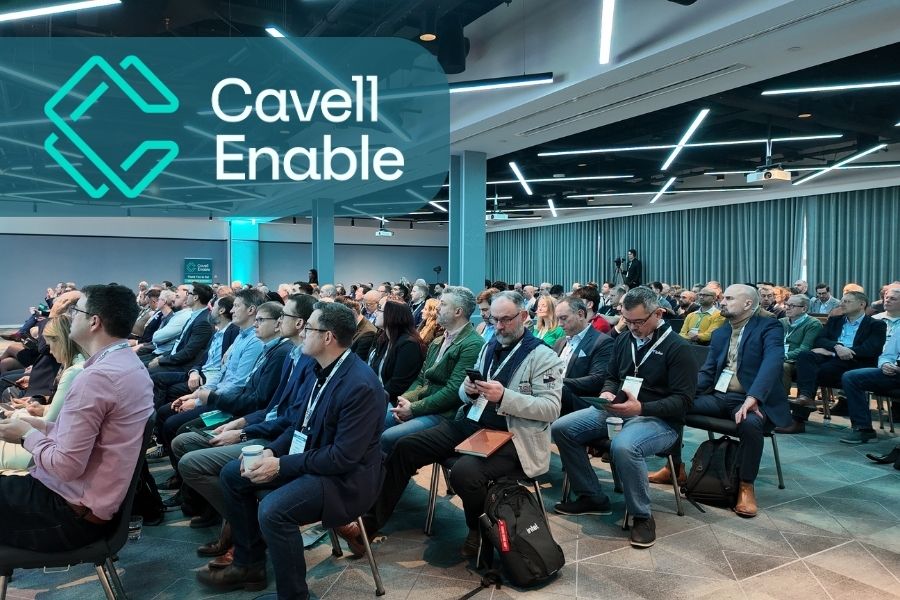
Cavell Enable 2025 brought together a broad cross-section of service providers, telecom operators, platform vendors, and channel specialists to examine how enablement markets are evolving under the combined pressures of cloud migration, platform convergence, and accelerating AI adoption. Across more than a dozen sessions, a narrative emerged: the market is moving decisively beyond technical enablement towards outcome-led, consultative innovation.
Three interlocking themes dominated discussions. First, the quick decline of legacy voice and contact centre infrastructure in favour of cloud-based platforms. Second, the growing challenge of differentiation in increasingly standardised, vendor-driven marketplaces. Third, the need to harness AI not as a superficial feature set, but as a driver of business outcomes and operational efficiency.
Collectively, these themes point to a big shift in where value is created and captured across the enablement ecosystem.
Cloud Migration and Platform Convergence Are Reshaping Market Boundaries
One of the most consistent messages at Cavell Enable 2025 was the accelerating decline of on-prem PBX and traditional contact centre platforms. Across multiple sessions, speakers cited negative double-digit CAGR for legacy deployments, contrasted with sustained growth in UCaaS and CCaaS adoption.
Microsoft, Zoom, and Cisco leaders highlighted more than 10 million new cloud telephony seats added globally, with cloud-first procurement now the default approach for a majority of enterprises. Enterprise case studies from BAE Systems and Clifford Chance reinforced this trajectory, demonstrating large-scale migrations to Teams-based voice, significant reductions in operational overhead, and material simplification of communications estates.
Importantly, this is not simply a story of replacement. Platform convergence is redefining market boundaries, with telephony increasingly embedded inside collaboration environments. Operator Connect, Zoom Phone, and Cisco Webex Calling were repeatedly cited as mechanisms for accelerating voice adoption within existing productivity platforms. However, speakers also noted that while collaboration adoption is widespread, full PSTN enablement remains low, indicating substantial untapped opportunity for service providers able to support managed migrations at scale.
Differentiation Has Shifted from Product to Integration and Automation
A second dominant theme was the erosion of margin in basic voice services. Across Cavell keynotes and multi-marketplace panels featuring Gamma, NTT Data, and Bandwidth, there was broad agreement that dial tone and minutes are now fully commoditised.
Differentiation has moved decisively towards integration, automation, and value-added services. Over 60 percent of enterprises indicated plans to expand telephony within collaboration platforms, but only where deployment and integration are frictionless. This places the burden of complexity squarely on providers and partners.
Automation in OSS and BSS, extensible APIs, and managed services such as migration, compliance, and vertical-specific workflows were repeatedly highlighted as critical survival strategies. Vendors reinforced this message, positioning partners not as resellers, but as operational enablers who can simplify adoption and accelerate time to value for customers.
The implication is clear: providers that fail to invest in automation and integration capabilities will struggle to retain margin and relevance, regardless of their vendor alignment.
AI Transformation Is Real, but Uneven and Often Overstated
AI was a constant presence throughout Cavell Enable 2025, but discussions were notably pragmatic. Cavell and Dom Black’s research shows that while the majority of organisations are trialling AI in some form, most current deployments remain incremental. Analytics, call summarisation, and basic routing dominate, with high levels of project abandonment and limited realised ROI.
Enterprise panellists cautioned against overhyping AI capabilities, warning of growing scepticism around “AI washing”. At the same time, vendors including Microsoft, Zoom, and Cisco showcased agentic AI roadmaps and platform-level integrations that signal a more transformative phase ahead.
The tension between these views was productive. The consensus was not that AI is overhyped, but that its commercialisation requires a shift in provider capability. Customers increasingly expect guidance from trusted telecom and platform partners, not just features. Cavell’s data suggests that over 40 percent of enterprises will look to their existing communications suppliers for AI strategy and delivery support, creating both opportunity and risk for providers that lack consultative expertise.
Multi-Platform Strategies Offer Opportunity, but Increase Risk
The rise of multi-platform portfolios was another recurring theme. End-user demand, channel requirements, and regulatory diversity are pushing many providers to support multiple ecosystems, most commonly Microsoft, Zoom, and Cisco.
However, six panels and multiple case studies highlighted the operational complexity this creates. Overlapping roadmaps, duplicated investment, and diluted resources can quickly erode the benefits of breadth. As several speakers noted, supporting multiple platforms without a clear value-added strategy risks becoming an expensive exercise in parity rather than differentiation.
The most compelling arguments favoured selective, value-led multi-platform strategies. Rather than attempting to be everything to everyone, providers were encouraged to prioritise depth in areas such as compliance, analytics, security, or vertical specialisation. Strategic selectivity, not maximal coverage, emerged as the more sustainable model.
Strategic Imperatives for Service Providers and Vendors
Taken together, the discussions at Cavell Enable 2025 point to a clear set of strategic imperatives as the industry looks towards 2026.
First, investment in workflow and OSS/BSS automation is no longer optional. Automation underpins scalable enablement, faster provisioning, and margin protection, particularly as cloud adoption accelerates.
Second, providers must develop AI-driven managed services and consultative sales capabilities. As AI projects proliferate, customers will increasingly demand outcome-led solutions rather than standalone features.
Third, multi-platform strategies must be grounded in clear value propositions and realistic operational capacity. Depth and differentiation matter more than breadth.
Fourth, telephony within collaboration platforms represents a significant growth opportunity, but only for providers able to support managed migrations and simplify customer journeys.
Finally, emerging areas such as identity management, trusted communications, and verified calling were consistently highlighted as future revenue streams, particularly as enterprises prioritise security and trust in digital interactions.
From Enablement to Advantage
Cavell Enable 2025 marked a clear evolution in the industry conversation. Where previous years focused heavily on technical enablement and platform readiness, this year’s discussions were defined by operational execution, commercial differentiation, and strategic restraint.
For service providers, vendors, and channel partners, the message was unambiguous. Success in the next phase of the market will depend less on what platforms are supported, and more on how effectively complexity is removed, outcomes are delivered, and trust is built with customers navigating an increasingly AI-driven communications landscape.