

 Back
to
all
Back
to
all
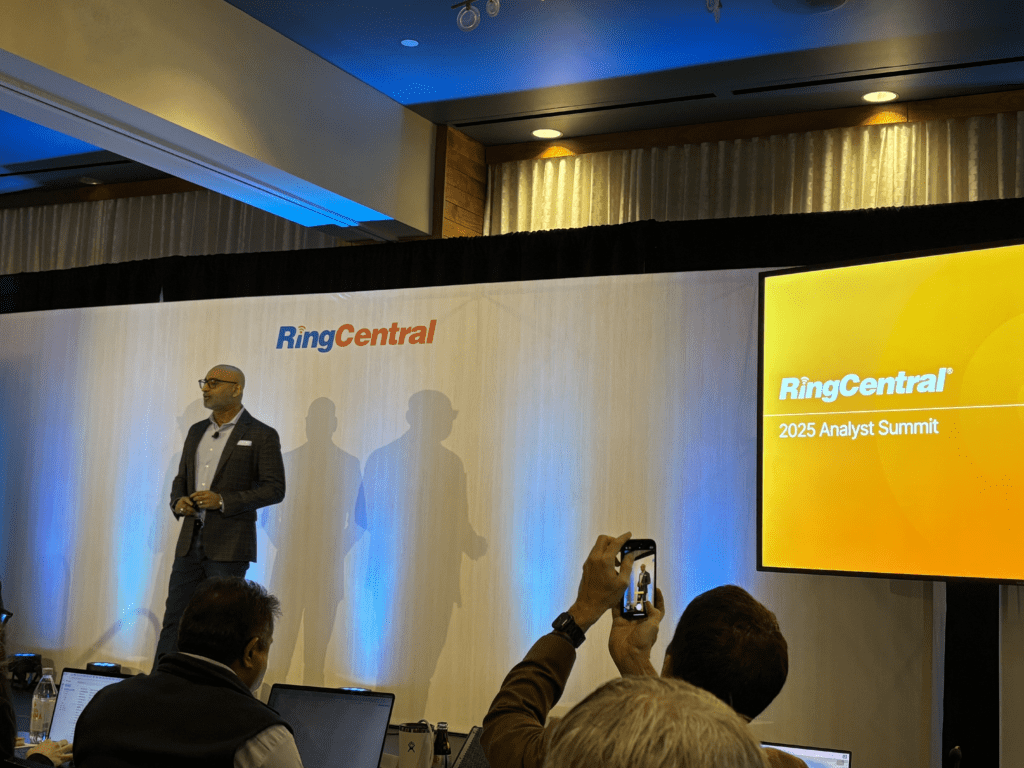
As the communications industry continues to evolve alongside AI capabilities, RingCentral’s approach reflects the broader challenges companies face in balancing established offerings with emerging technologies.
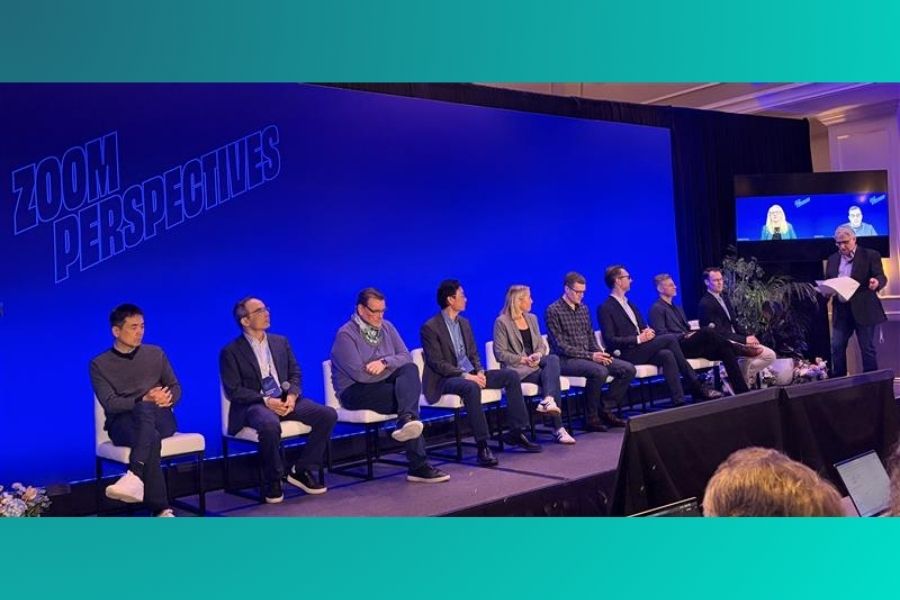
Sunny Napa Valley, California, was the setting for RingCentral’s annual Analyst Summit, where, unsurprisingly, the artificial intelligence opportunity dominated discussions.
The event came in the wake of RingCentral’s quarterly results release, where strong earnings weren’t enough to overcome the general market malaise towards UC/CC companies.
RingCentral, Zoom, 8×8 and NICE have all seen their share prices drop over recent weeks despite meeting or beating analyst estimates, largely due to weaker-than-expected forecasts for upcoming quarters.
This is, of course, against the backdrop of AI uncertainty impacting the biggest technology companies in the world. Investors are pondering whether the billions of dollars spent on the infrastructure to power AI may have gotten out of hand.
But tech CEOs remain defiant, and RingCentral boss Vlad Shmunis is no different.
“AI is the mother of all megatrends,” he told investors last week – a cute line that was repeated several times by RingCentral execs throughout the analyst event at Bardessono Hotel & Spa.
Amid the nervousness around AI spending, Shmunis declared AI “the future of RingCentral”.
So, it was poignant that this event came just a week after the company revealed AI Receptionist – an agent designed to be the customer-facing, virtual front-of-house for businesses.
The system answers calls automatically, handles routine inquiries, routes complex calls to appropriate staff, and can schedule appointments with SMS follow-up.
The product is built directly into the existing RingCentral phone system rather than requiring third-party integrations. Setup takes minutes, as show in a demonstration at the Analyst Summit, and requires no additional applications.
Features include:
- Immediate call answering
- Automated handling of common questions
- Intelligent call routing based on names and conversation context
- Appointment scheduling capabilities
- SMS follow-up functionality
The system uses generative AI and natural language processing and can be trained using business websites and documents to provide company-specific responses.
Appointment scheduling functionality is scheduled to be available by the end of Q1 2025.
The scripted live demo at the Analyst Summit went without hitch, the product has expected latency issues encounted by most voice AI products. Whether a six second wait for an answer is a matter of personal opinion, but this will only get better over time.
RingCentral is, of course, grappling with the same AI dilemma as all communications companies. AI may be the future, but how? No one seems quite sure how it should be monetised.
RingCentral AI Receptionist is not yet generally available, so the leadership team has time to ponder the pricing structure. The vibe at the moment seems to be that organisations will purchase bundles of interactions and then be charged on a usage basis if they go over their tariff – but this is by no means finalised.