

 Back
to
all
Back
to
all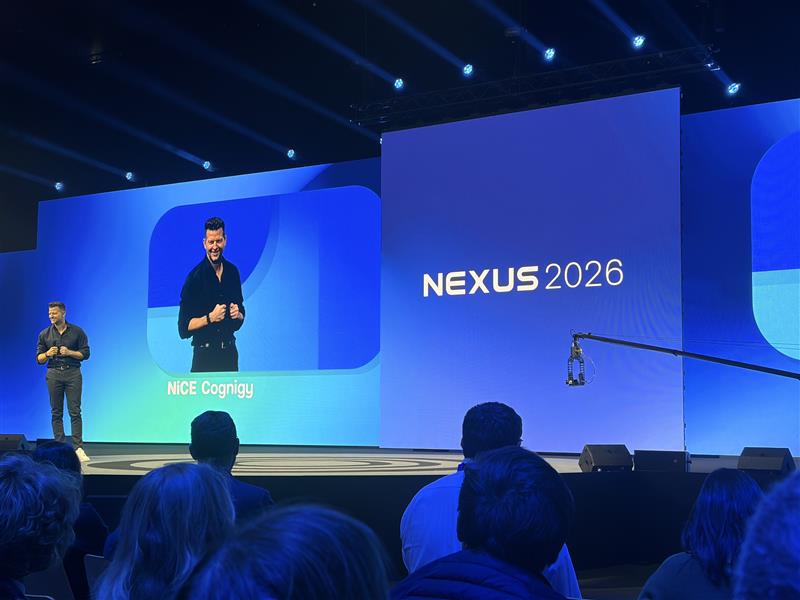
The technology industry has a habit of talking to itself. Events, analyst reports, vendor briefings — they tend to reflect the priorities of the people in the room, not the reality of the market outside it. Nexus 2026, hosted by NiCE and Cognigy, was a partial exception to that rule. It brought genuine enterprise practitioners into the room, with real deployments and hard-won operational lessons. But it also illustrated just how wide the gap has become between where the leading edge of customer experience is heading and where most organisations actually are.
Nexus 2026 was a customer‑first event. The agenda leaned heavily towards enterprise case studies, operational lessons, and practical examples of AI in live CX environments. The audience reflected that focus. This was a room dominated by large organisations. Many have thousands of contact centre agents. Many are already deep into multi‑year AI-driven CX transformation programmes.
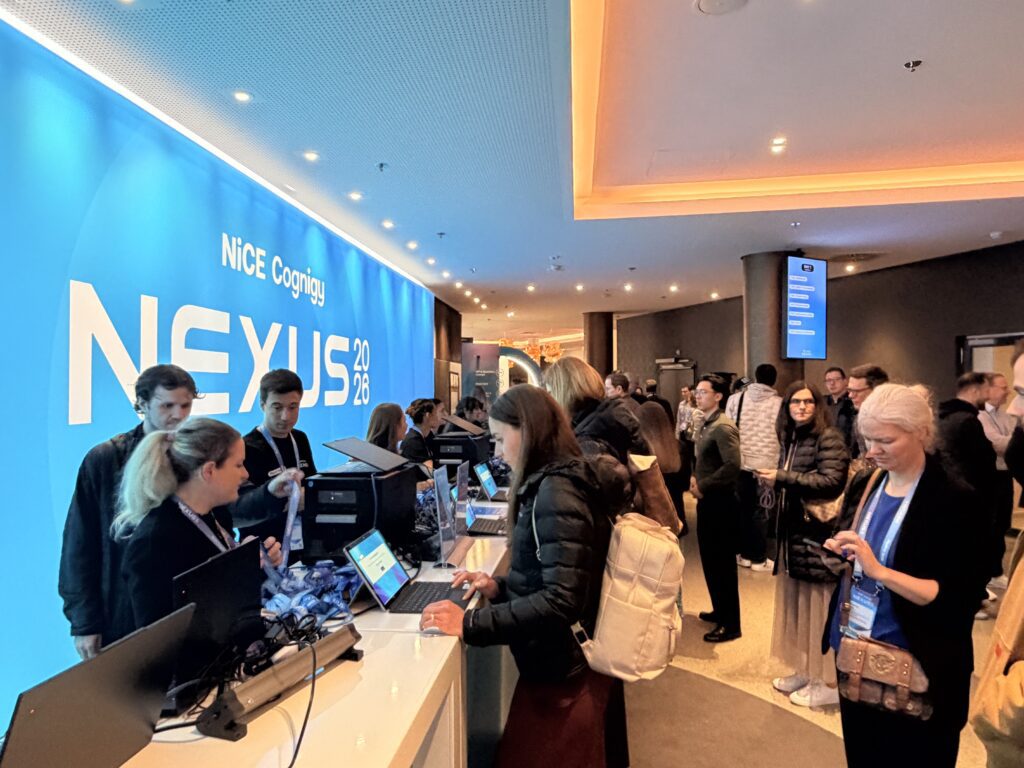
The event was also unapologetically centred on agentic AI. Not as an abstract concept, but as something already being deployed. Across voice, chat, and proactive engagement. Across retail, aviation, insurance, utilities, and logistics.
Agentic AI – Cavell defines agentic AI as AI systems that pursue high‑level goals, operate in unstructured environments, and make autonomous, multi‑step decisions that adapt to context and learn from outcomes rather than simply reacting to predefined rules.
Agentic agents – In Cavell’s research, an agentic agent is an AI‑powered agent that can handle unstructured conversations, plan and execute actions autonomously, tailor responses to the customer, and learn from each interaction over time.
But as the event unfolded, three themes kept resurfacing for me. Each raised as many questions as answers.
The growing gap between AI ambition and real‑world adoption
One of the most striking moments at Nexus came from a simple audience poll. The majority of organisations in the room said they were using agentic AI for less than 10% of their customer interactions. A significant portion was not using it at all. This sat in sharp contrast to what followed.
Schwarz Group shared data showing that around 20% of global digital sales during Black Friday 2025 were influenced or touched by agentic AI. This is a business with nearly 600,000 employees, operating on a vast scale. The implication was clear. At the very top end of the market, agentic AI is already having a material impact.
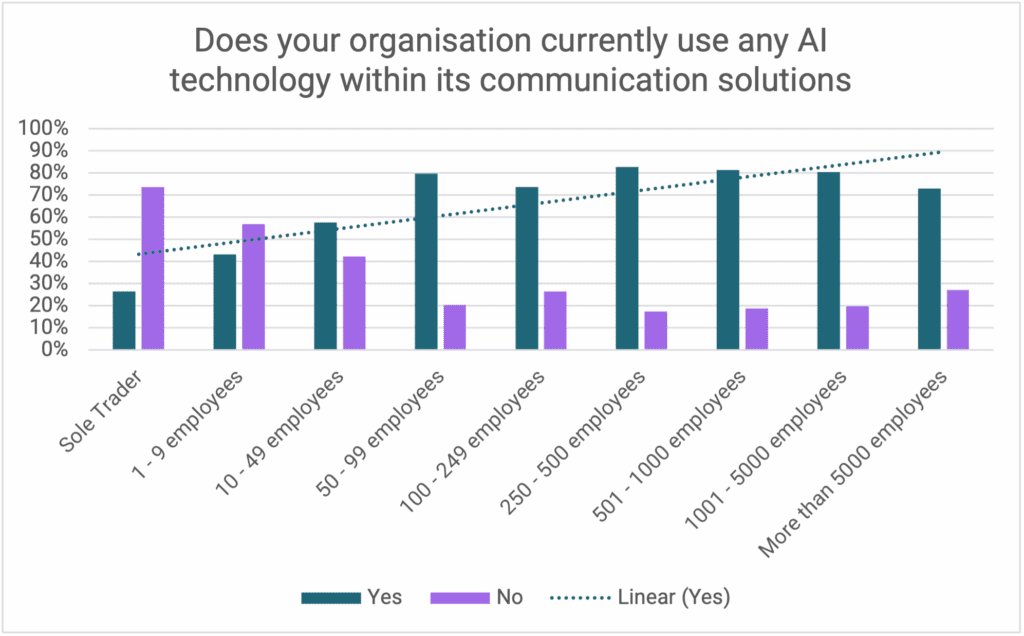
The gap between these two data points was hard to ignore. Even within a room full of large enterprises, adoption remains cautious and uneven. When you extend that lens to mid‑market organisations, communication service providers, or SMEs, the gap widens further. Cavell’s own data shows that both contact centre modernisation and AI uptake fall sharply as organisations get smaller. Let alone use, or even awareness, of agentic AI.
This is not a criticism of NiCE or Cognigy. Their ideal customer profile is clear. Large, complex enterprises with scale, budget, and operational maturity. But it does raise an uncomfortable question for the wider industry. Are events like this showing us where CX is going, or only where a small part of the market can realistically go?
Many sessions focused on what is possible now. Autonomous agents. Proactive outreach. Orchestration across journeys. These ideas are compelling, but the path from possibility to deployment remains steep for most organisations.
Even among advanced users, progress has been incremental rather than explosive. Lufthansa spoke openly about blocking a large proportion of AI‑generated messages in the early stages due to accuracy concerns. Allianz described extensive prompt tuning and governance work just to reach acceptable confidence levels.
This reinforces a broader pattern. AI in CX is real. But it is happening slowly, unevenly, and with a lot of friction.
The unresolved question is whether this gap will close naturally over time or risk becoming structural. A divide between a small number of very advanced enterprises and everyone else. The cloud and SaaS platforms were supposed to democratise contact centre solutions, not further widen any customer service gap.
Strong technology narratives, but limited go‑to‑market discussion
Another theme that stood out was what was not discussed in depth. Nexus 2026 was rich in customer stories and product vision. It was far lighter on go‑to‑market execution and routes to market. There were no details on partner strategy beyond global system integrators, customer focus, or regional variation, aside from large US‑centric multinationals. This is understandable. The event was aimed at customers, not partners. But the absence still mattered.
NiCE and Cognigy are clearly investing heavily in global system integrators. This came through in both sessions and discussions with executives. The logic is sound. Many large enterprises already rely on these firms for AI strategy, transformation programmes, and change management. However, this also narrows the immediate reach of the technology.
There was little discussion of how NiCE and Cognigy are performing globally outside US‑led multinationals. Nor much clarity on how, or if, they intend to scale adoption beyond the top tier of the market. For communication technology providers in particular, this remains an open question.
During a briefing, NiCE CMO Michelle Cooper framed this as a deliberate focus rather than an oversight. The priority for 2026 is to protect and expand the existing enterprise base. Cross‑selling Cognigy services into NiCE’s installed base, and vice versa, is central to that plan.
Downmarket expansion exists, but more as an opportunity area than a strategic shift. Organisations with 500 employees, or possibly 250 over time, are on the radar. But they are not the core focus. This helps explain the tone of the event. Nexus was not about breadth. It was about depth.
Still, the lack of broader GTM discussion leaves important questions unanswered. If agentic AI is to become mainstream in CX, the ecosystem around it will need to broaden to include partners, providers, regional specialists, and channel organisations.
None of this was fully addressed, probably intentionally, but the gap remains.
Are there balanced drivers behind AI‑first CX?
If there was one idea that quietly threaded through almost every case study, it was balance.
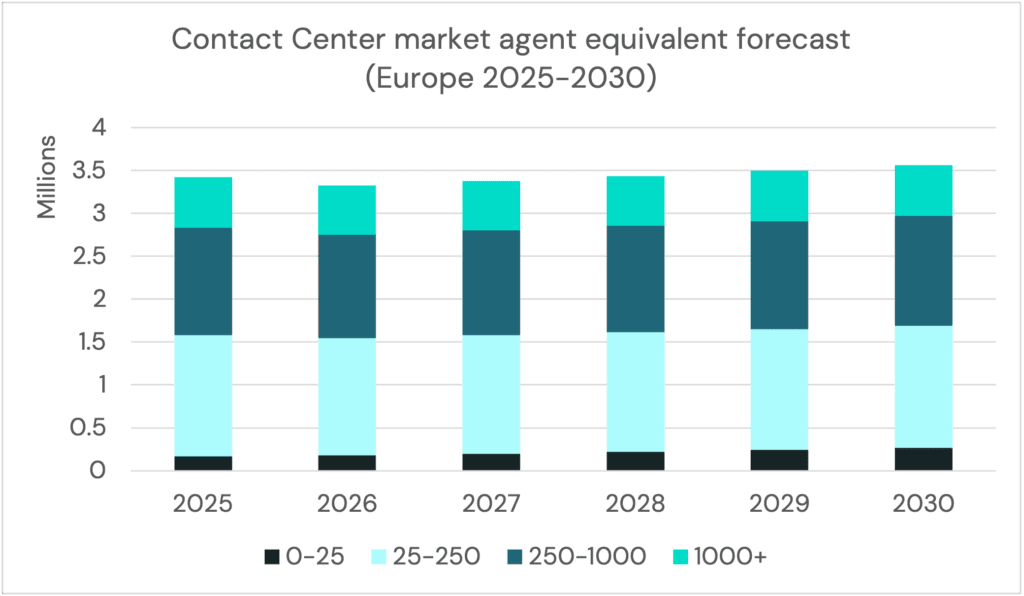
Despite the rhetoric around autonomy and AI‑first design, most organisations are not pursuing AI to remove human agents outright. They are trying to balance cost pressure, customer experience, operational resilience, and workforce realities. At Cavell, our forecasts don’t indicate a significant decline in demand for agents anytime soon, even in an advanced market like Europe.
Fabletics is a good example. Their move towards agentic AI did not start with a desire to deploy AI. It started with a need to increase self‑service and manage seasonal demand fluctuations. Traditional automation had delivered low returns despite high investment. Decision trees were shallow and brittle.
Agentic AI offered something different. A way to handle variability, context, and conversation. The early results were encouraging. Member satisfaction with the bot was broadly in line with human interactions. Automated save rates approached those of experienced human agents.
But even here, the picture was nuanced. The project is still in progress. The demographic profile of Fabletics’ customers may influence acceptance. Human agents still outperform bots in some scenarios. Cavell consumer survey data shows that many customers continue to prefer human interaction.
“Despite the growth of digital and automated channels, consumers still associate positive customer service outcomes most strongly with human interaction.
Cavell’s research found that just over half of respondents (51%) said a direct conversation with a human agent, either by phone or facetoface, was the most likely way to achieve a positive outcome.”
Cavell Consumer Contact Research – Data from 1019 consumers who have interacted with a business or organisation for customer service or shopped online
This raises a deeper question. Are organisations optimising for customer preference, or for business outcomes?
Lufthansa’s experience adds another layer. Their agentic deployment improved rebookings, reduced handovers, and increased satisfaction scores. From a business perspective, the case is strong. But the model still relies on customer compliance. If customers reject automation, the system falters.
Other examples from organisations in the financial sector were more explicit. Cost reduction was the key driver. In one example, aggressive cost‑ratio targets underpin the entire CX strategy. Agent augmentation and assistance are viewed as a transitional technology. The long‑term direction is fewer human agents.
Sky’s perspective reinforced this tension, but from a different angle. As an entertainment business, Sky frames CX differently from banks or insurers. Content, not service, is the core value. Customer experience exists to keep people engaged, consuming, and subscribed. As a result, churn reduction is the dominant KPI, well ahead of pure cost reduction.
Sky’s CX transformation has unfolded in multiple phases, with the exploration of agentic AI as the final phase. The aim is not simply deflection or headcount reduction. Agentic AI is being used to improve intent and sentiment detection, increase digital containment, and surface new interactions that were previously missed. Crucially, this includes turning service moments into engagement moments that pull customers back to content rather than ending the interaction as quickly as possible.
That creates a different kind of balance. Reduce contact time too aggressively, and you also reduce opportunities to build loyalty, build trust, or expand the relationship. Automation removes friction, but it can also remove touchpoints that matter.
Sky’s approach highlights a trade‑off that sat beneath many discussions at Nexus. Efficiency versus engagement, containment versus connection.
Taken together, these case studies suggest agentic AI is not being deployed as a blunt replacement tool. It is being used selectively to rebalance CX, often cautiously, and not always in line with customer preferences.
This is where the question of balance becomes uncomfortable. Who is really driving the shift to agentic CX? Customers? Or providers and enterprises responding to margin pressure? At Nexus, the answer often leaned towards the latter. Not because customer experience is ignored, but because economic reality is hard to avoid.

What Nexus 2026 suggests, not what it proves
Nexus 2026 did not offer neat conclusions. The event showed, to me anyway, that agentic AI in CX is no longer experimental at the top end of the market. Real deployments are delivering real results: cost savings, experience improvements, and operational resilience. NiCE Cognigy is clearly at the forefront of this in terms of global technology provision.
At the same time, it highlighted how uneven adoption remains. The amount of work the CX industry needs to do in terms of raising consumer awareness, changing attitudes, and then executing, is not insignificant.
The gap between ambition and reality is real. Go‑to‑market execution remains concentrated, and the balance between customer preference and business pressure is far from settled.
Nexus did not resolve these tensions or answer all the questions I have about the balance between the future of customer experience and the desires of business, employees, and consumers. But it surfaced them clearly. That, perhaps, is exactly what a good industry event should do.