

 Back
to
all
Back
to
all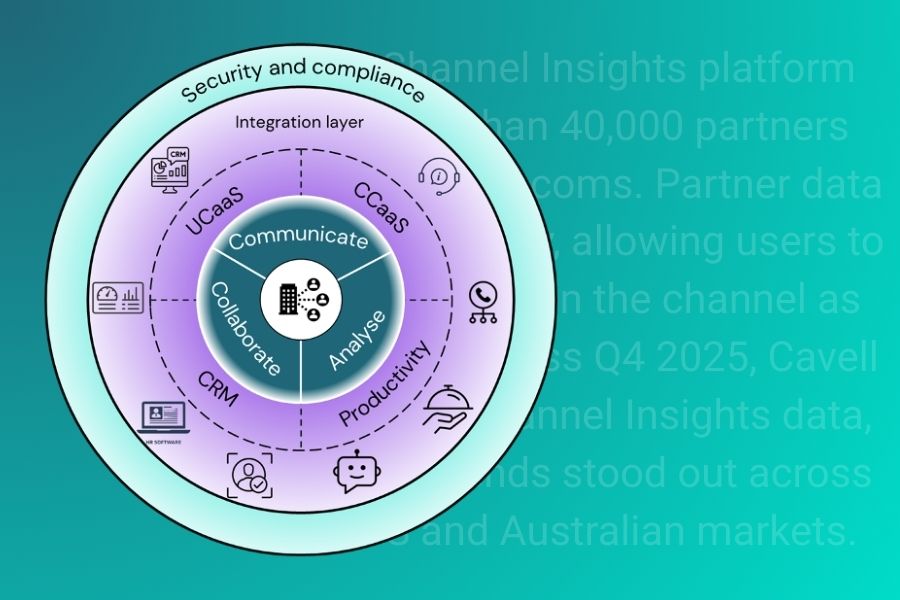
Why channel data matters
The channel plays a vital role in how communications technology reaches the market. Vendors rely on partners such as VARs, MSPs, and distributors to sell products, support customers and reach new regions. This channel model helps vendors scale without some of the barriers that accompany direct sales. It also gives customers access to trusted local partners who understand their requirements.
Most communications technology is sold through the channel. Cavell data shows that more than 70% of sales go through partners rather than directly from vendors. This underlines how important it is for vendors to understand who these partners are, what they sell, and how they go to market. Channel models also vary by region. Agency models are more common in the US, while direct resale is more common in the UK and much of Europe. However, these models continue to evolve as technology becomes more complex and service led.
Cavell built the Channel Insights platform to help stakeholders understand this landscape. It allows organisations to see which partners operate across different parts of the Intelligent Workplace, including UC, contact centre, CRM, productivity tools, and security. The platform also highlights size, product focus, and route to market, helping vendors shape go-to-market strategies based on data rather than assumption.
What we saw in Q4 2025
Cavell’s Channel Insights platform tracks more than 40,000 partners across IT and telecoms. Partner data is updated monthly, allowing users to observe changes in the channel as they happen. Across Q4 2025, Cavell observed the Channel Insights data, and several trends stood out across the UK, US and Australian markets.
Vertical specialisation is becoming the norm
Most partners now describe themselves as vertical specialists. In the US, just over three-quarters of partners position themselves this way. In the UK, the figure is even higher, with more than four-fifths showing a clear focus on specific industries. Australia is also moving in this direction, with steady growth during the quarter.
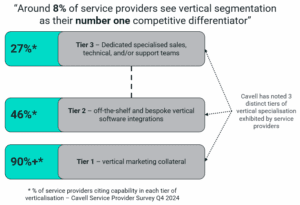
The US market is heavily industry-led, with strong focus on healthcare, public sector, finance, manufacturing, and retail. Partners in the UK follow a similar pattern, but with added focus on regulated industries and public services such as education. Australian partners still balance industry focus with scalebased positioning. This shift is part of a wider trend. As markets become crowded, partners need to stand out. Broad, general services no longer cut through.
Customers want partners who understand their sector and can support specific use cases. Cavell research shows that many partners speak about vertical focus, but fewer take the next step of building specialised products, integrations, or technical teams.
Bundled UCaaS and CCaaS adoption remains stable
UCaaS continues to be one of the largest solution areas in the channel. In the US, more than 13,500 partners sold UCaaS in Q4. In the UK, the figure was just over 4,000. The number of partners selling both UCaaS and CCaaS together has remained steady. The US saw an average of more than 4,200 partners offering combined solutions. The UK averaged just over 1,500, and Australia averaged more than 800.
This stability suggests that the UC and CC convergence trend is well established. Organisations increasingly see value in linking internal and external communications, improving alignment between teams and supporting better customer experiences. As a result, vendors and partners continue to sell and support both technologies side by side.
Security is now core to partner propositions
Security and connectivity play a central role in how partners go to market. In the US and UK, around six in ten partners highlight these capabilities. In Australia, the figure is close to three-quarters. This is far higher than emerging focus areas such as AI or CRM. Security has become a priority for customers, especially with rising use of AI tools.
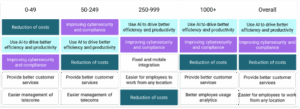
Organisations want confidence that data is handled safely and meets compliance standards. Cavell’s Impact Series research shows clear opportunities for partners to grow revenue by adding more security services. Channel Insights enables organisations to track which partners already have these capabilities and where gaps remain across the channel.
What this means for 2026
The Q4 2025 data shows a channel that is shifting towards depth rather than breadth. Many partners are refining their portfolios and building stronger focus areas. Vertical expertise is becoming essential. UC and CC convergence continues to shape partner propositions. Security is now a standard part of the offer rather than an add-on.
In 2026, the most significant changes will likely come from how partners continue to specialise. Communication technology providers will need to understand which partners have real depth, where key capabilities sit and how the channel is evolving. Channel Insights provides clear, structured data to support these decisions and help organisations strengthen their channel strategies.