

 Back
to
all
Back
to
all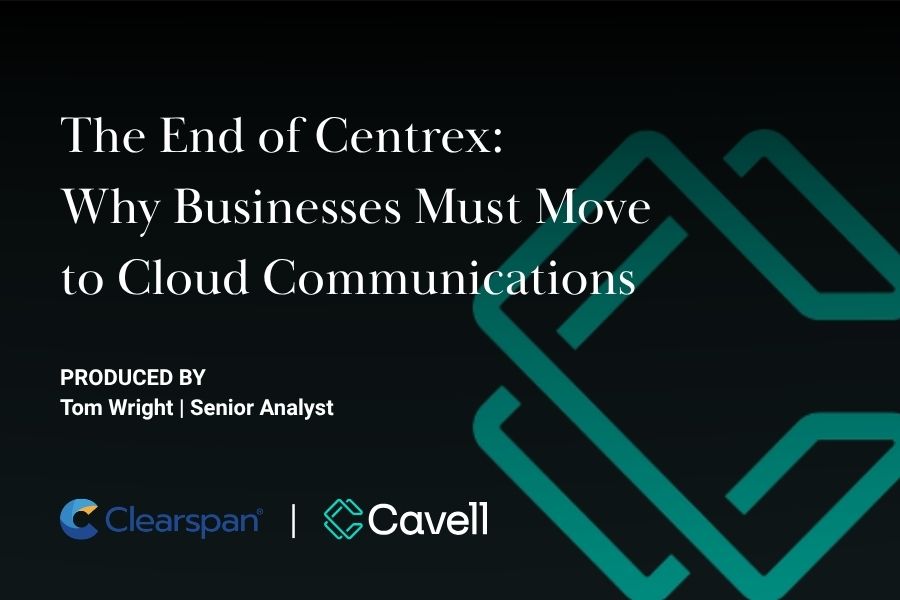
Cavell’s latest whitepaper, produced in partnership with Clearspan, examines the decline of Centrex in the U.S. and the migration imperative facing organizations still running on legacy telephony infrastructure. Here are five key takeaways.
1. Centrex is not fading quietly; it is being forced out
The paper makes clear that Centrex retirement is not a gradual market trend but an active program of decommissioning by carriers. In the U.S., AT&T is closing central offices on a rolling basis, giving affected organizations months rather than years to find alternatives. Pricing is being used as a lever, too, with POTS line costs rising dramatically to accelerate migration. For the estimated one million lines still running on Centrex in the U.S., the window is narrowing fast.
- View the full whitepaper here
2. The remaining Centrex base is concentrated in complex, risk-averse sectors
The organizations still on Centrex are not there by accident. Government agencies, universities, hospitals, and financial institutions adopted Centrex decades ago because it suited their procurement models and operational needs. These are organizations with conservative IT cultures, long buying cycles, and deep integration between their telephone service and physical infrastructure such as elevator phones, fire panels, and nurse call systems. That complexity is precisely why they have not yet moved, and why migration requires more than a standard UCaaS deployment.
3. Analog devices are the hidden migration blocker
One of the whitepaper’s most practical observations is that Centrex lines carry far more than voice traffic. Alarm systems, door entry panels, fax machines, postage meters, and emergency phones all depend on the analog signal and line voltage that copper provides. Each of these devices needs to be audited, and most will require an analog telephone adapter or specialist gateway to function on a modern platform. For a large school district or hospital network, this audit alone is a significant undertaking.
4. Not all cloud migration paths solve the same problem
The paper outlines five broad replacement options: on-premises IP PBX, UCaaS platforms, overlay solutions via session border controllers, carrier-hosted cloud voice, and specialist platforms designed specifically for Centrex replacement. Each has trade-offs. UCaaS platforms work well for desk-based workers but may struggle with complex telephony requirements. Carrier solutions can be rigid. Overlay approaches buy time but do not address the underlying infrastructure shutdown. The whitepaper argues that organizations with complex, multi-site environments need a platform that can be configured to their requirements rather than one that forces them to adapt.
5. The U.S.cloud comms market is mature, but there is still significant legacy installed base
Cavell’s data shows U.S. cloud communications penetration sitting just under 70%, with forecasts pointing toward 90% by the end of the decade. That still leaves roughly 25 million users on legacy solutions including on-premises PBX and Centrex. Cloud migration remains the top priority for 16% of North American IT buyers, a notable figure given how far the market has already shifted. The remaining legacy base represents both a challenge and an opportunity for service providers positioned to handle complex migrations.