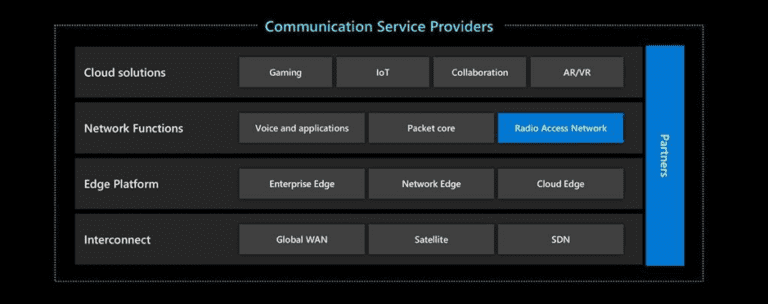
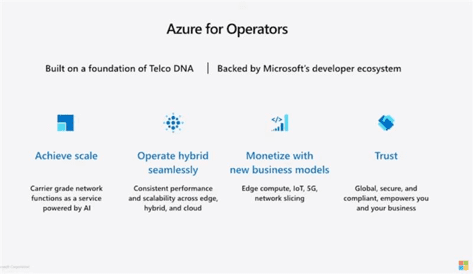
The launch of Azure for Operators is a progression in offering “focused” operator services and may go some way to address these concerns.
Microsoft is also recognising a growing market opportunity in both Edge computing and 5G.
Operators are still approaching 5G as a traditional service and Microsoft wants the 5G network core to be run by Azure on the Azure cloud. 5G, by its nature, demands an agile and flexible core infrastructure – which Microsoft may believe operators are not equipped to provide currently.
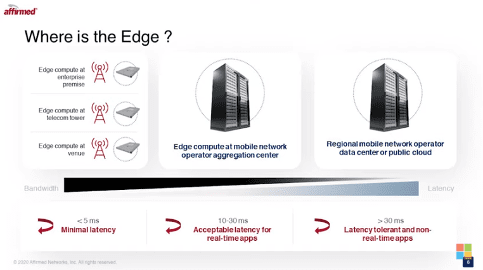
Edge computing also provides an opportunity with the future of business networking driven by application requirements.
Latency, self-healing networks, and the intelligent Edge are all central to the future of more complex applications. Microsoft see this an area where Azure’s capabilities may prove tempting for service providers and operators.
Data possession and management is the cloud battleground of the future.
Data collection is key, and it can be uses to build complex intelligence services like machine learning (ML) and artificial intelligence (AI) systems. These value-added services are the goal that many companies are striving for now.
This is especially true in networking, with companies like Cisco, Juniper, and VMWare all striving to build smarter, more automated, and eventually self-healing networks.
Microsoft sees a similar opportunity in its increased service offering to operators. By integrating itself into 5G, IoT and Edge networks, the amount of data available to Microsoft relating to consumer patterns, trends, and network usage will grow massively.
This data can then be used not just to improve the quality of the network but also dictate how services are developed and operated, giving Microsoft a competitive advantage in the marketplace.




 Back
to
all
Back
to
all